Most students revise by reading notes and highlighting — and then forget the content days later.
This page shows you how to train your memory properly using active recall techniques recommended by experienced teachers and examiners.
These strategies are ideal for:
• KS3 students (Years 7–9)
• GCSE students (Years 10–11)
• Students who revise but forget content
• Parents supporting revision at home
You do not need special apps or expensive resources — just questions, paper, and consistency.
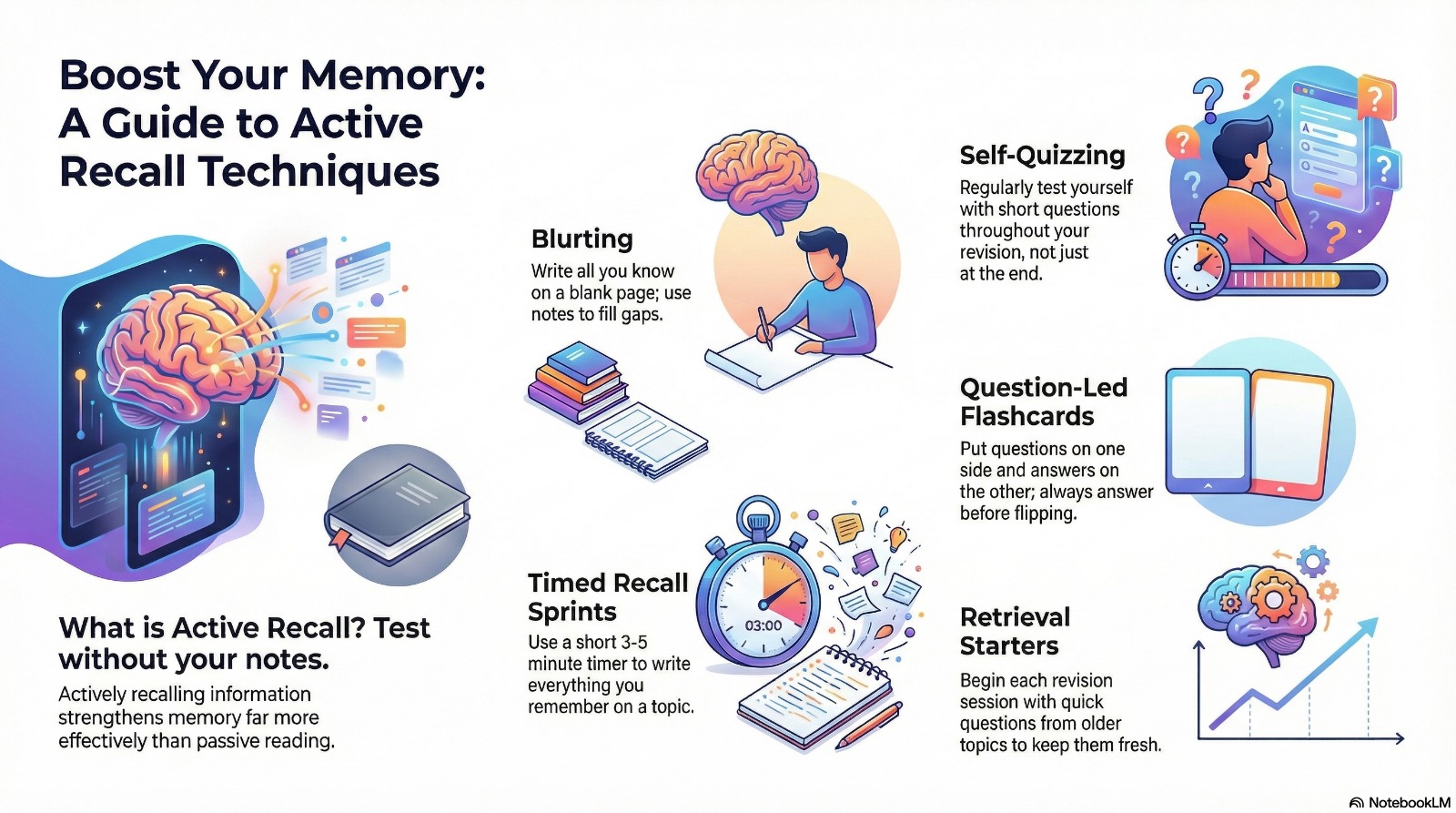
Active recall means forcing your brain to retrieve information from memory instead of recognising it from notes.
If you are not trying to remember information without looking, your revision is mostly passive — and passive revision is ineffective.
Active recall:
• Strengthens long-term memory
• Improves exam performance
• Makes revision time more efficient
Testing your memory without notes.
1. Close your book or notes
2. Answer questions or write bullet points from memory
3. Check and correct using notes
If it feels difficult, that means it is working.
A fast way to check what you actually remember.
1. Write the topic title on a blank page
2. Write everything you remember
3. Add missing points in a different colour
What you miss shows you what to revise next.
Testing yourself regularly using questions.
1. Use short questions or quizzes
2. Answer without notes
3. Check answers immediately
Self-testing during revision is more effective than revising first and testing later.
Quick recall at the start of a revision session.
1. Start with 5–10 questions from previous topics
2. No notes allowed
3. Then move on to new content
This prevents forgetting older topics.
Short recall tasks under time pressure.
1. Set a 3–5 minute timer
2. Write or say everything you remember
3. Review and repeat
This builds speed and confidence for exams.
Flashcards designed to test memory, not reading.
1. Question on the front, answer on the back
2. Answer before flipping
3. Sort into: Know / Almost / Don’t Know
Flashcards only work when used actively.
• 5 minutes – Retrieval starter (old topics)
• 10 minutes – Blurting or flashcards
• 10 minutes – Active recall questions
• 5 minutes – Check answers and log mistakes
This is far more effective than reading notes for 30 minutes.
• Re-reading notes without testing memory
• Highlighting large blocks of text
• Saying “I understand it” without checking recall
• Revising for long periods without breaks
If revision feels easy, it usually isn’t working.
Once you can remember content reliably, focus on how to score marks in exams.
All Demos Included with this amazing WordPress Theme you will have everything you need to create a memorable and enchanting online presence. Start create your dream site today.
Our team delivers reliable solutions tailored to your specific needs. We prioritize quality and customer satisfaction in every project.