Make sense of topics instead of memorising without understanding
Intro paragraph (calm, reassuring tone):
If revision feels confusing or overwhelming, the problem is often how information is organised, not how much you revise.
This page shows you how to structure and understand content clearly so it actually makes sense and stays in your memory.
👉 Watch the video below, then apply the techniques step by step.
Who benefits from these strategies?
This page is ideal for:
• Students who feel revision is confusing or disorganised
• KS3 students learning how to revise independently
• GCSE students overwhelmed by large topics
• Parents supporting revision at home
These strategies focus on clarity before memorisation.
Why understanding comes before memorising
Trying to memorise content that isn’t organised leads to:
• Confusion
• Shallow learning
• Forgetting under exam pressure
Organising content properly helps you:
• See connections between ideas
• Understand processes and concepts
• Recall information more easily in exams
CORE STRATEGIES
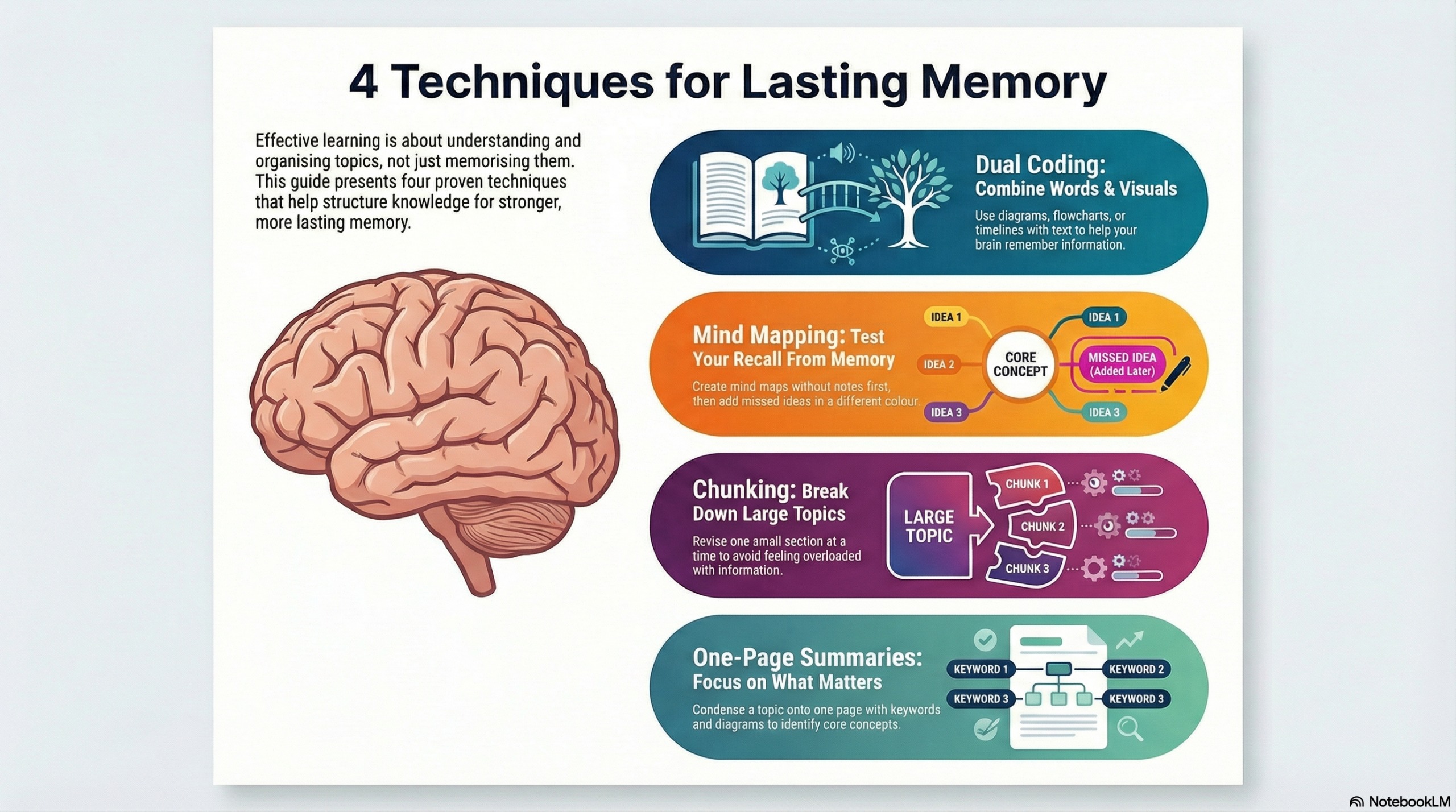
Dual Coding
What it is:
Combining words with visuals to improve understanding and memory.
How to use it properly:
• Turn notes into diagrams, flowcharts, tables, or timelines
• Use labels and arrows clearly
• Keep visuals simple and meaningful
Visuals should explain information, not decorate it.
Mind Mapping (From Memory)
What it is:
Creating mind maps to test and organise understanding.
How to use it properly:
• Write the topic in the centre
• Add branches from memory
• Check notes and add missing ideas in a different colour
This reveals gaps in understanding clearly.
Chunking
What it is:
Breaking large topics into smaller, manageable sections.
How to use it properly:
• Divide topics into clear sub-topics
• Revise one chunk at a time
• Master each chunk before moving on
Small steps lead to better understanding.
One-Page Summaries
What it is:
Condensing a topic into its most important ideas.
How to use it properly:
• Use one A4 page per topic
• Include keywords, diagrams, and symbols
• Avoid full sentences
If you can summarise it clearly, you understand it.
HOW TO USE THIS IN REAL REVISION
Example: 35-Minute Understanding
Session
• 5 minutes – Review topic structure
• 15 minutes – Dual coding or chunking
• 10 minutes – Create a mind map from memory
• 5 minutes – Check and improve organisation
This builds understanding before moving to recall or exam practice.
COMMON ORGANISATION MISTAKES TO AVOID
Avoid these mistakes:
• Copying diagrams directly from textbooks
• Writing long paragraphs instead of structuring ideas
• Trying to summarise everything in one go
• Memorising without understanding connections
Good organisation makes later revision much easier.
What to do next
Once content is clear and organised, plan how and when to revise it effectively.
These strategies:
• Are used by experienced teachers and examiners
• Work across Maths, English, and Science
• Are suitable for KS3 and GCSE students
Clear understanding leads to more confident exam answers.
BEST WP THEME
All Demos Included
All Demos Included with this amazing WordPress Theme you will have everything you need to create a memorable and enchanting online presence. Start create your dream site today.