How to revise efficiently without wasting time or burning out
Intro paragraph (confidence-building, practical):
Many students revise for long hours but make little progress because their revision isn’t planned properly.
This page shows you how to plan revision intelligently, so time is spent on the right topics, in the right way, at the right time.
👉 Watch the video below, then use the strategies to plan your revision effectively.
Who should focus on revision planning?
This page is ideal for:
• Students who feel busy but not improving
• GCSE students preparing for mocks or exams
• KS3 students learning how to revise independently
• Parents supporting revision at home
Good planning reduces stress and improves results.
Why revising more hours isn’t the answer
Without a clear plan, revision often becomes:
• Repetitive
• Focused on easy topics
• Unbalanced across subjects
• Stressful and inefficient
Smart planning ensures revision is:
• Balanced
• Targeted
• Sustainable
• Linked to exam requirements
CORE STRATEGIES
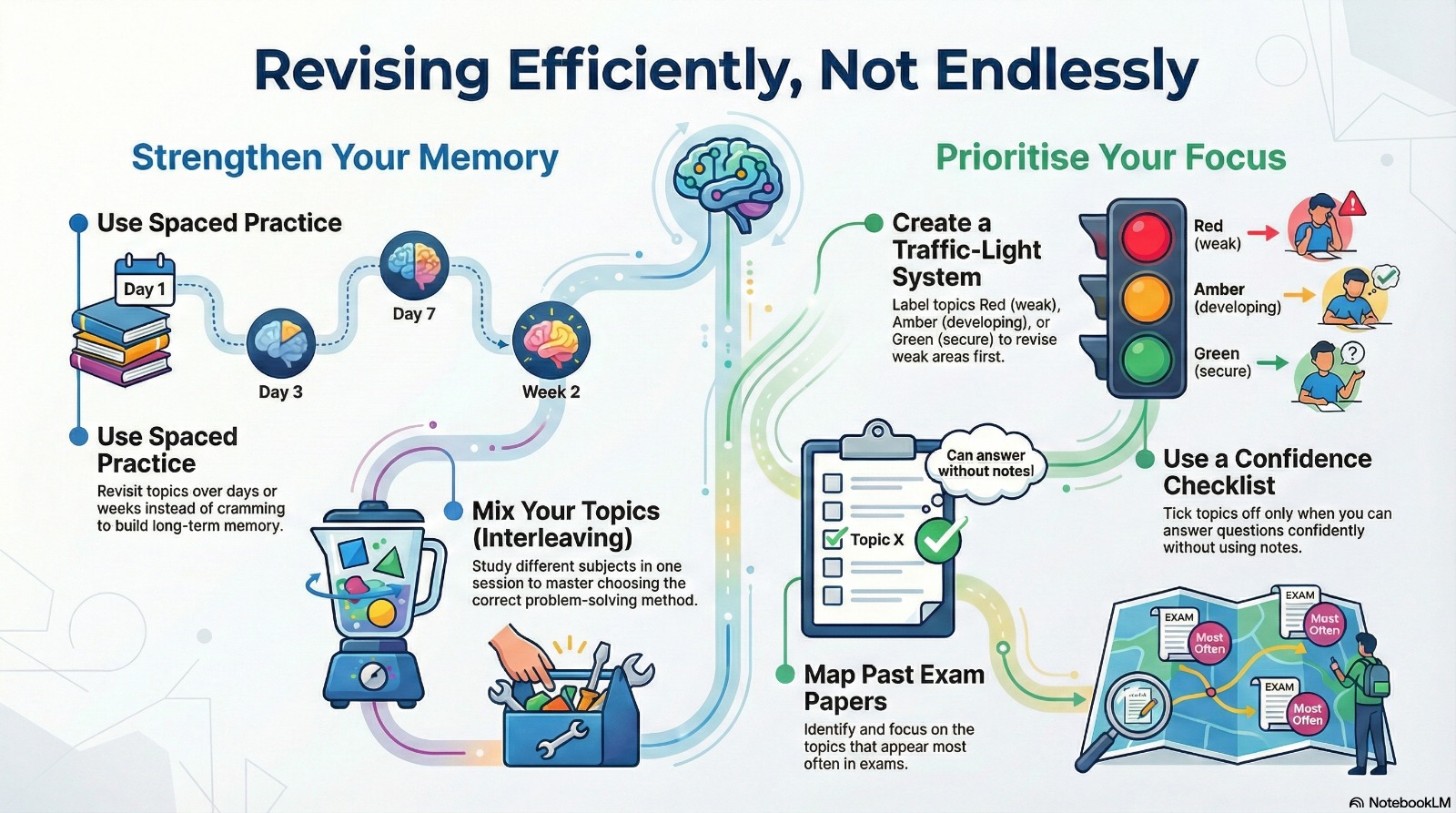
Spaced Practice
What it is:
Revisiting topics at increasing intervals over time.
How to use it properly:
• Revise a topic, then revisit it days later
• Test yourself each time
• Increase the gap between sessions
This strengthens long-term memory far more than cramming.
Interleaving
What it is:
Mixing different topics or skills in one revision session.
How to use it properly:
• Revise multiple topics in one session
• Switch between question types
• Avoid revising one topic for too long
This improves your ability to choose the correct method in exams.
Traffic-Light Topics
What it is:
Prioritising revision based on confidence.
How to use it properly:
• Red = weak
• Amber = developing
• Green = secure
• Start revision with red topics
Honest prioritisation leads to faster improvement.
Checklist Revision
What it is:
Using topic lists to track progress accurately.
How to use it properly:
• Use a specification or topic checklist
• Tick topics only when you can answer questions without notes
Reading a topic does not mean it is secure.
Past Paper Topic Mapping
What it is:
Identifying which topics appear most often in exams.
How to use it properly:
• Label past paper questions by topic
• Identify common and recurring topics
• Prioritise these in revision plans
This helps focus revision where it matters most.
HOW TO USE THIS IN REAL REVISION
Example: Weekly Smart Revision Plan
• Monday: Red topics (active recall + questions)
• Wednesday: Amber topics (interleaved practice)
• Friday: Past paper questions + review
• Weekend: Retrieval starters + light review
Short, consistent sessions are more effective than long, irregular ones.
COMMON PLANNING MISTAKES TO AVOID
Avoid these mistakes:
• Filling timetables without thinking about quality
• Revising only favourite subjects
• Ignoring weak topics
• Cramming close to exams
A good plan should feel manageable, not overwhelming.
What to do next
Once revision is planned effectively, focus on learning from mistakes to improve faster.
These planning strategies:
• Are recommended by experienced teachers and examiners
• Work across Maths, English, and Science
• Help students revise consistently and confidently
Strong planning leads to calmer revision and better results.
BEST WP THEME
All Demos Included
All Demos Included with this amazing WordPress Theme you will have everything you need to create a memorable and enchanting online presence. Start create your dream site today.