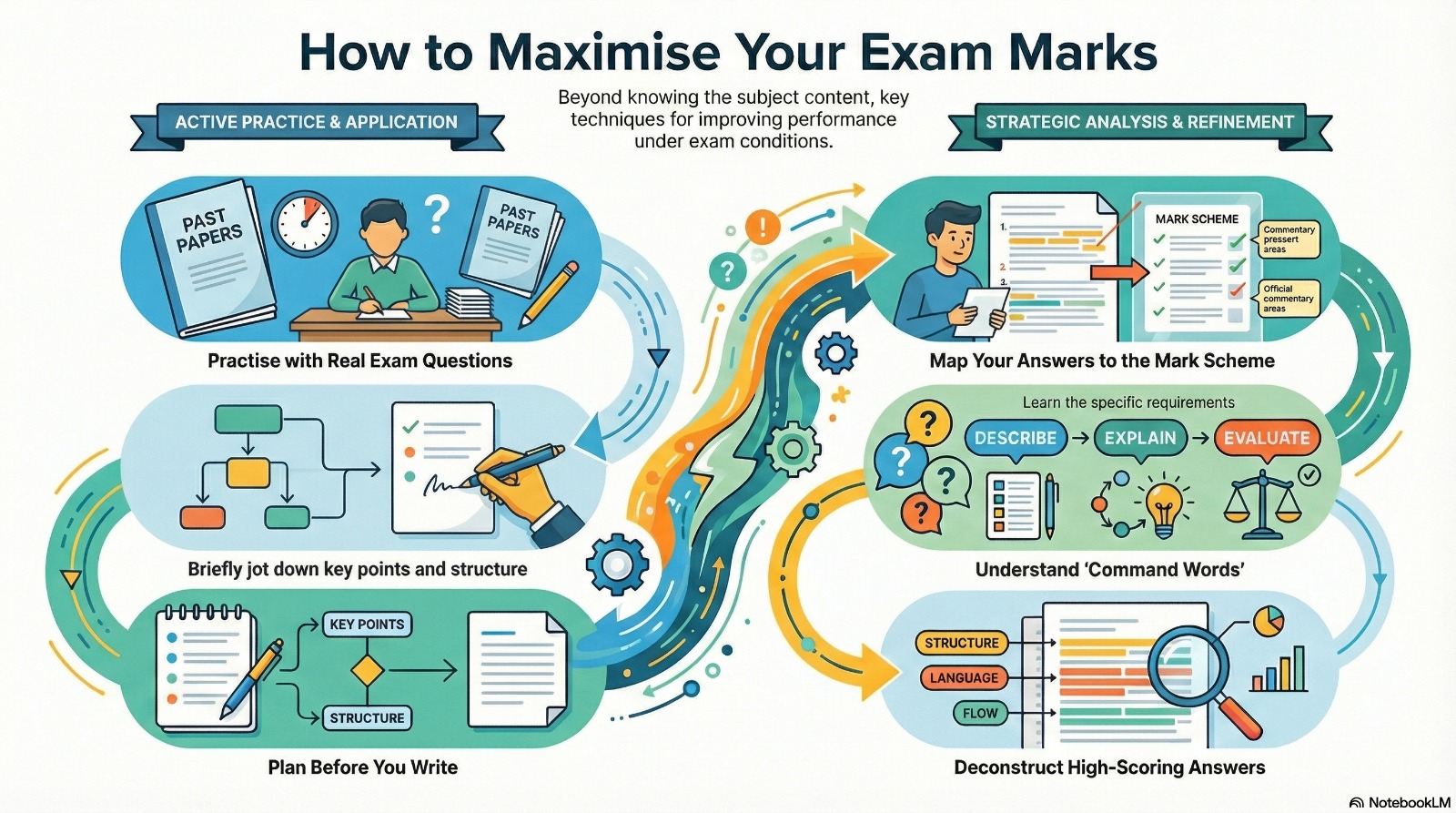
Why knowing the content isn’t enough to get top grades
Intro paragraph (authority-driven):
Many students know the subject content but still lose marks in exams.
This page explains how exams are actually marked and how to write answers that examiners reward.
👉 Watch the video below, then apply the strategies to your exam practice.
Who should focus on exam technique?
This page is especially useful for:
• GCSE students (Years 10–11)
• KS3 students preparing for assessed work
• Students stuck on the same grade despite revising
• Parents unsure why marks are being lost
Strong exam technique often makes the difference between grades.
How examiners award marks
Examiners do not award marks for effort or length.
Marks are awarded for:
• Specific points
• Correct use of subject vocabulary
• Clear explanations and reasoning
• Answering the command word correctly
Understanding this changes how you revise and answer questions.
Exam Question Practice
What it is:
Practising real exam-style questions under exam conditions.
How to use it properly:
1. Use past paper or exam-style questions
2. Stick to the marks and time given
3. Practise regularly, not just at the end of revision
Exams test application, not memory alone.
Mark-Scheme Mapping
What it is:
Learning exactly how marks are awarded.
How to use it properly:
1. Compare your answer to the mark scheme
2. Highlight where you gained marks
3. Write down what was missing
This trains you to write what examiners are looking for.
Command Word Training
What it is:
Understanding what each command word requires.
How to use it properly:
Common examples:
• Describe – say what you see
• Explain – give reasons or causes
• Compare – similarities and differences
• Evaluate – judge and justify
Answering the wrong way loses marks even with correct knowledge.
Timing Drills
What it is:
Practising how long to spend on each question.
How to use it properly:
1. Roughly 1 minute per mark
2. Do not over-write low-mark questions
3. Move on if time is up
Good timing protects your overall score.
Answer Planning Drills
What it is:
Planning answers before writing.
How to use it properly:
1. Jot down 3–5 bullet points
2. Order them logically
3. Then write the answer
A clear plan leads to clearer answers.
Model Answer Deconstruction
What it is:
Learning from full-mark answers.
How to use it properly:
1. Highlight key points and phrases
2. Identify structure and linking words
3. Copy the structure, not the wording
This shows you what “good” really looks like.
HOW TO USE THIS IN REAL EXAM PRACTICE
Example: 40-Minute Exam Practice Session
• 5 minutes – Plan approach and review command words
• 25 minutes – Answer exam-style questions under time
• 10 minutes – Mark using the mark scheme and reflect
This approach improves technique faster than doing questions without review.
COMMON EXAM MISTAKES TO AVOID
Avoid these mistakes:
• Writing everything you know instead of answering the question
• Ignoring command words
• Spending too long on one question
• Not using the mark scheme to improve
Most lost marks come from technique, not lack of knowledge.
What to do next
Once exam technique is secure, focus on organising and understanding content.
• Used by experienced teachers and examiners
• Suitable for GCSE and KS3 students
• Effective across Maths, English, and Science
Strong exam technique leads to higher marks without revising more content.
BEST WP THEME
All Demos Included
All Demos Included with this amazing WordPress Theme you will have everything you need to create a memorable and enchanting online presence. Start create your dream site today.